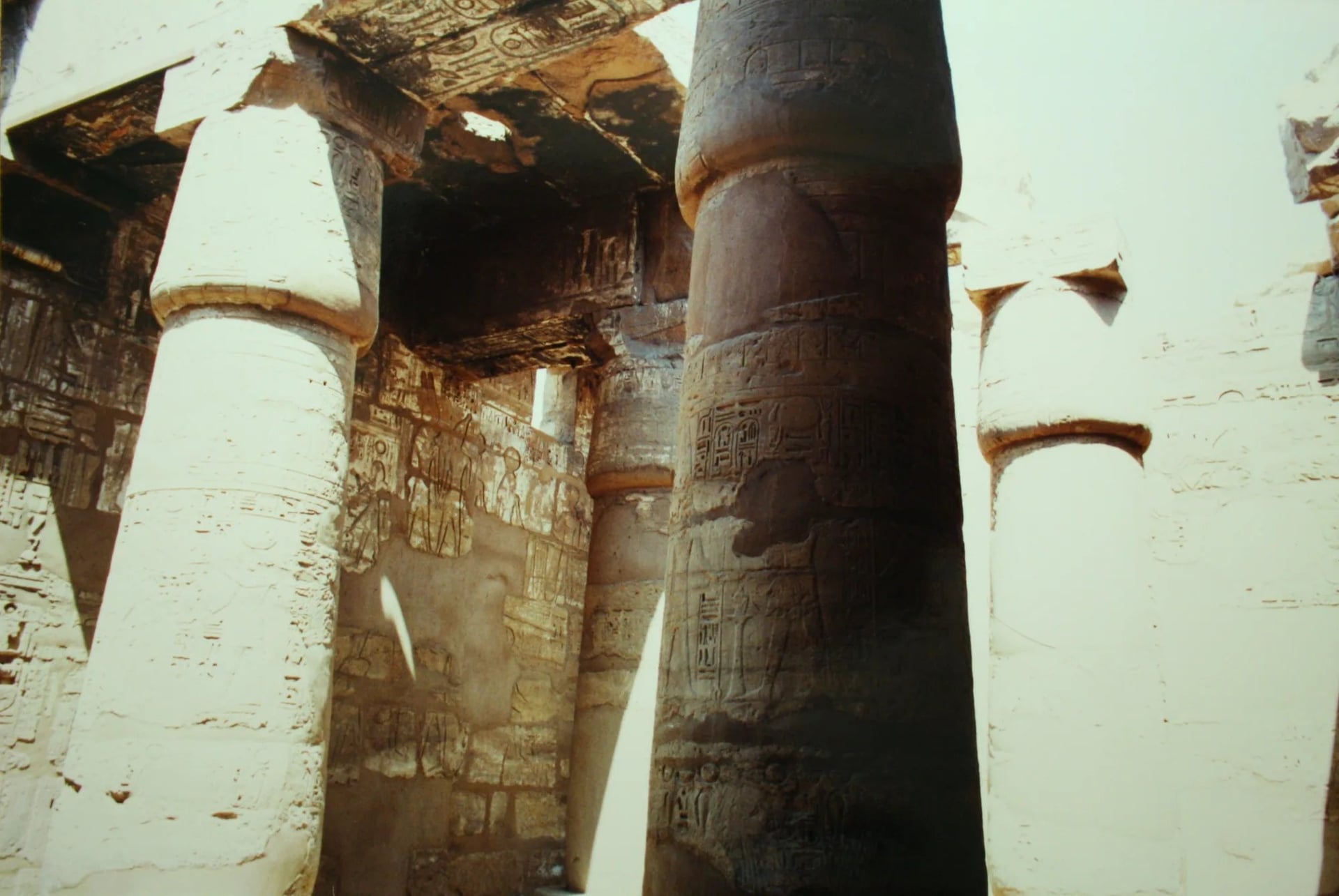
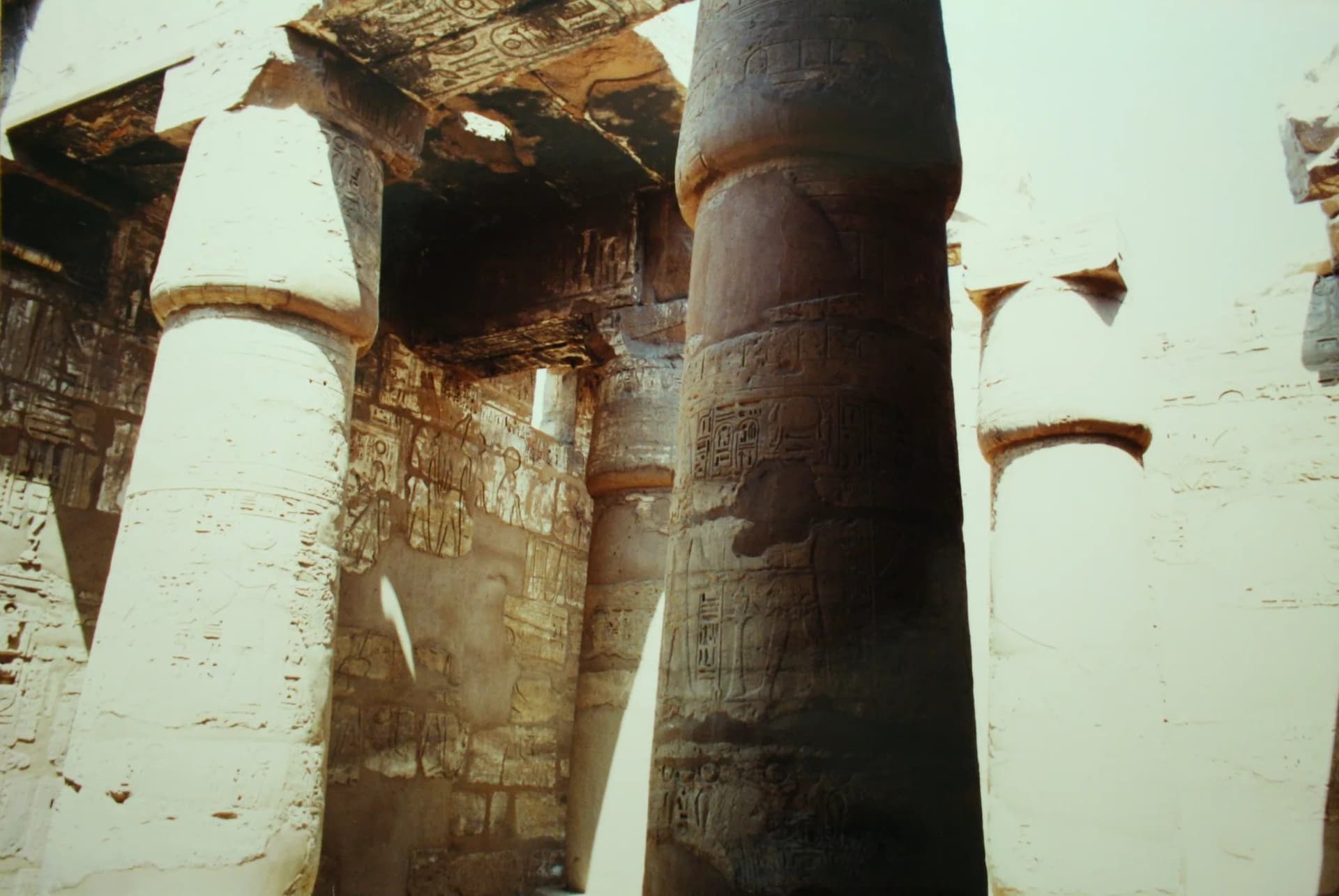
Karnak is less a single temple than a vast complex of temples, chapels, and pylons, built up and expanded by successive pharaohs over roughly 2,000 years. Luxor Temple, a short distance away, is smaller and more contained, sitting right in the middle of modern Luxor.
| Karnak Temple | Luxor Temple | |
|---|---|---|
| Opening hours | Daily 6:00am–5:00pm | Daily 6:00am–8:00pm |
| Foreign adult ticket | EGP 600 | EGP 500 |
| Foreign student ticket | EGP 300 | EGP 250 |
| Egyptian adult ticket | EGP 40 | EGP 40 |
| Scale | A complex of temples built over ~2,000 years | A single, more contained temple |
(Hours and prices per official government sources, verified 2026-08-13, high volatility for pricing.) Karnak's Great Hypostyle Hall, with its forest of towering columns, is one of the most photographed spaces in Egypt. The standard Karnak ticket also covers Karnak's Open Museum; the Mut Temple, within the same complex, needs its own ticket (EGP 200 for a foreign adult).
How the two were once connected
The two temples were historically linked by the Avenue of Sphinxes, a processional road used during the ancient Opet Festival — parts of it have been excavated and are visible again today. Luxor Temple's later evening hours make it a common stop after dark, when it's lit up for a striking night visit.
For the other major site on most Luxor itineraries, see Is the Valley of the Kings Worth Visiting?